<?xml version="1.0" encoding="UTF-8"?><feed xmlns="http://www.w3.org/2005/Atom" xmlns:dc="http://purl.org/dc/elements/1.1/">
                                        <id>https://transla.co.uk/en/blog</id>
                                            <link rel="self" href="https://transla.co.uk/en/blog"></link>
                                <title><![CDATA[Blog]]></title>
                                                                                                                <updated>2024-09-25T16:29:31+00:00</updated>
                        
            <entry>
            <title><![CDATA[The Quirks of Quince -  A Tale of Tradition, Taste and Elocution Challenges ]]></title>
            <link rel="alternate" href="https://transla.co.uk/en/blog/the-quirks-of-quince-a-tale-of-tradition-taste-and-elocution-challenges" />
            <id>https://transla.co.uk/en/blog/the-quirks-of-quince-a-tale-of-tradition-taste-and-elocution-challenges</id>
            <author>
                <name><![CDATA[Danni Howe]]></name>
                                    <email><![CDATA[dannailla77@gmail.com]]></email>
                            </author>
            <summary type="html">
                <![CDATA[<p style="text-align: justify;">Welcome to my blog, where language and life’s little joys often intertwine in unexpected ways. Today, I want to talk about something close to my heart (and home in south-west London): our quince tree. Standing proud in front of our house, this tree has become quite the conversation starter each autumn. Every year, without fail, people knock on our door, curious about the golden fruits it bears. “What fruit is this?” they ask, intrigued by the almost alien appearance of the quinces. It is a fruit that baffles many at first glance, but let me tell you, it is a treasure of flavour if you know what to do with it!</p>
<p> </p>
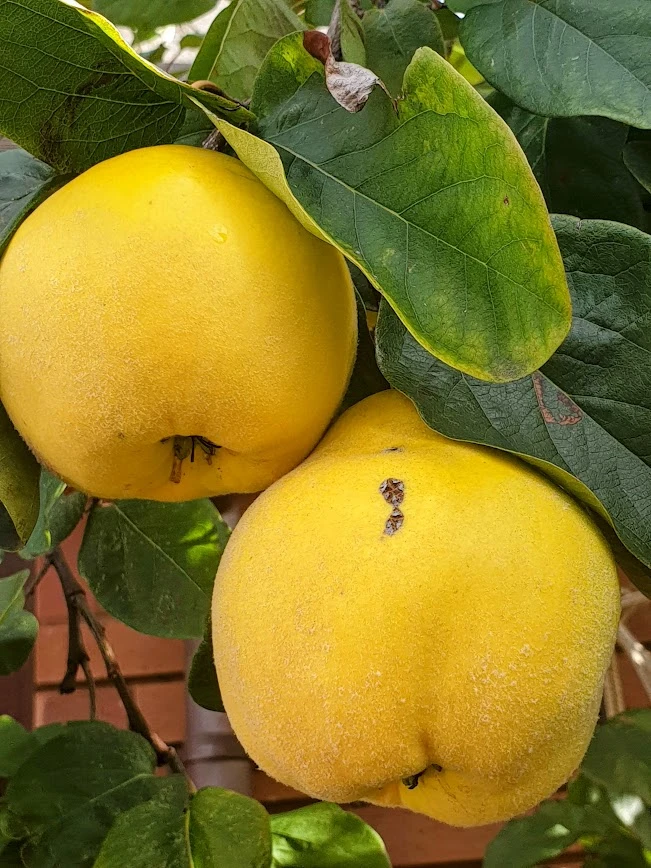
<p><img src="https://static.super.website/fs/super-website/userFiles/transla/uploaded-media/20191008145217-edit-17272715599223.webp" alt="Golden quinces ripening on the tree. Photo by Danni Howe" width="651" height="868" data-width="651" data-height="868"></img></p>
<p><em>Golden quinces ripening on our tree. Photo by Danni Howe</em></p>
<p> </p>
<h4>The Beauty of the Quince: Childhood Memories and the Art of Translation</h4>
<p> </p>
<p style="text-align: justify;">First things first—if you have ever tried to take a bite out of a raw quince, you will understand why it is not as straightforward as an apple. Tough and a bit too sharp for most palates when fresh off the tree, the quince requires a little culinary magic to truly shine.</p>
<p style="text-align: justify;"> </p>
<p style="text-align: justify;">For me, quinces are more than just a seasonal treat—they are tied to fond childhood memories from my time in Bulgaria. I remember the trees, much like the one outside our home now, heavy with fruit that would soon be transformed into jams and compotes, and once picked, filling the room with their distinctive, long-lasting aroma. The scent of cooking quinces in our kitchen brings me right back to those moments of warmth and family love. As a child, I knew my nan’s quince jam was unmatched, and despite never tasting anyone else's, I still believe it. She also baked quinces, halved and sugar-coated, allowing them to caramelise to perfection in the oven, filling the kitchen with the most divine aroma.</p>
<p style="text-align: justify;"> </p>
<p><img src="https://static.super.website/fs/super-website/userFiles/transla/uploaded-media/quince-2-17272716277802.webp" alt="Cosy autumn kitchen with quince-inspired treats, capturing family traditions and warm memories. AI-generated by Danni Howe." width="1024" height="1024" data-width="1024" data-height="1024"></img></p>
<p><em>Cosy autumn kitchen with quince-inspired treats, capturing family traditions and warm memories. The image is AI-generated by Danni Howe.</em></p>
<p> </p>
<p style="text-align: justify;">You might wonder how this relates to translation, particularly from Bulgarian to English. Like quince, translation is about transformation—turning something raw and unfamiliar into something refined and accessible. Just as you would not offer a raw quince to enjoy, words need careful handling to preserve their essence, considering both cultures. It is an art, much like my nan’s jam recipe, passed down and adapted over time.</p>
<p style="text-align: justify;"> </p>
<h4 style="text-align: justify;">From Quince to Queens: The Elocution Mishap</h4>
<p style="text-align: justify;">Although quinces are well-known to most Bulgarians, many still ask me how to say it in English. I tell them and even throw in a little mnemonic about "queens" to help them remember. But there was one moment that would have made my English elocution tutor roll his eyes! At that time, I had recently discovered quince gin, and it became my new favourite flavour. While visiting the Midlands, we went to the hotel bar, and I confidently asked the barman for a <strong>quince gin</strong>. His ears, clearly unaccustomed to foreign accents, led him to say they did not have it. I insisted they did, having enjoyed it the night before. Eventually, he "realised" what I wanted and returned proudly with a bottle of <strong>Queen’s gin</strong>, specially crafted for the Jubilee of Queen Elizabeth! Safe to say, I did not make my tutor proud that day!</p>
<p style="text-align: justify;"> </p>
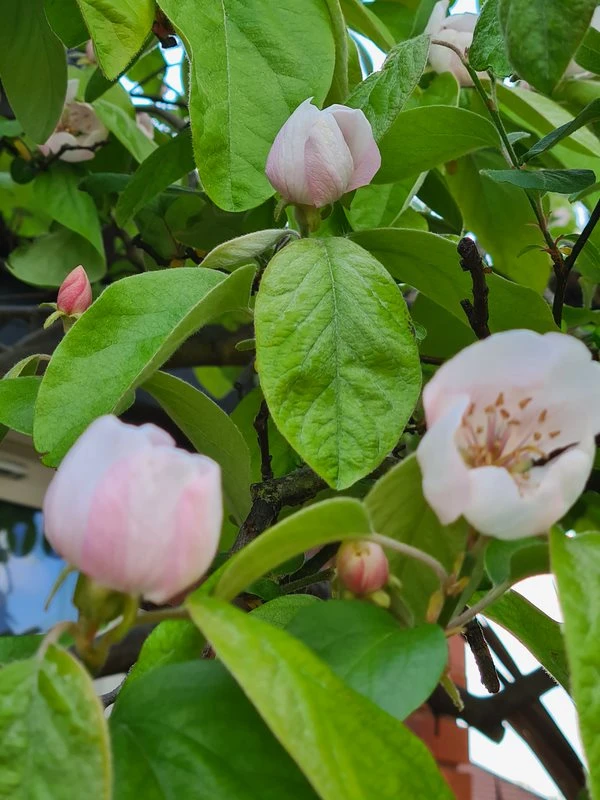
<p><img src="https://static.super.website/fs/super-website/userFiles/transla/uploaded-media/20210502102006c600x800-17272716743608.webp" alt="Beautiful quince blossoms, a sign of spring and a promise of the delicious fruit to come. Photo by Danni Howe" data-width="0" data-height="0"></img></p>
<p><em>Beautiful quince blossoms, a sign of spring and a promise of the delicious fruit to come. Photo by Danni Howe</em></p>
<p> </p>
<h4>Turning Quince into Culinary Magic (Family Favourites) </h4>
<p>Here are some of our family favourites that transform this odd-looking fruit into pure deliciousness:</p>
<ul>
<li>My nan’s quince jam - a nostalgic treat that pairs beautifully with a slice of fresh bread or cheese.</li>
<li>My mum’s and nan's baked quince - a simple yet satisfying way that brings out the fruit’s full flavour.</li>
<li>My own quince Tart Tatinn - often combined with apples for a perfect balance of sweetness and tang. It's a twist on the classic, but oh, so good.</li>
<li>My own quince crumble - combining the fruit’s tartness with a buttery, crunchy topping for a cosy autumn dessert.</li>
<li>My own quince duck sauce - a delicacy that adds depth and sweetness to savoury dishes.</li>
<li>My own quince ice cream - I probably shouldn't mention this one because it was a bit of a failure. </li>
<li>And, for the adults only, quince gin—a fragrant, autumnal twist on a classic spirit. Trust me, it’s a must-try!</li>
</ul>
<p> </p>
<h4>The Art of Transformation: From Quinces to Words</h4>
<p>So, next time you pass by a quince tree or stumble upon a translation challenge, think of the journey each takes—from its raw, unrefined state to something filled with character and meaning. Both require care, attention to detail, and a deep appreciation for the process. And, much like a perfectly baked quince or a well-crafted translation, the result is always worth it.</p>
<p> </p>
<p>As autumn settles in and the quinces ripen on our tree, we are ready once again for those curious knocks at the door. And whether they are asking about the fruit or the art of translation, I am here to help. </p>
<p> </p>
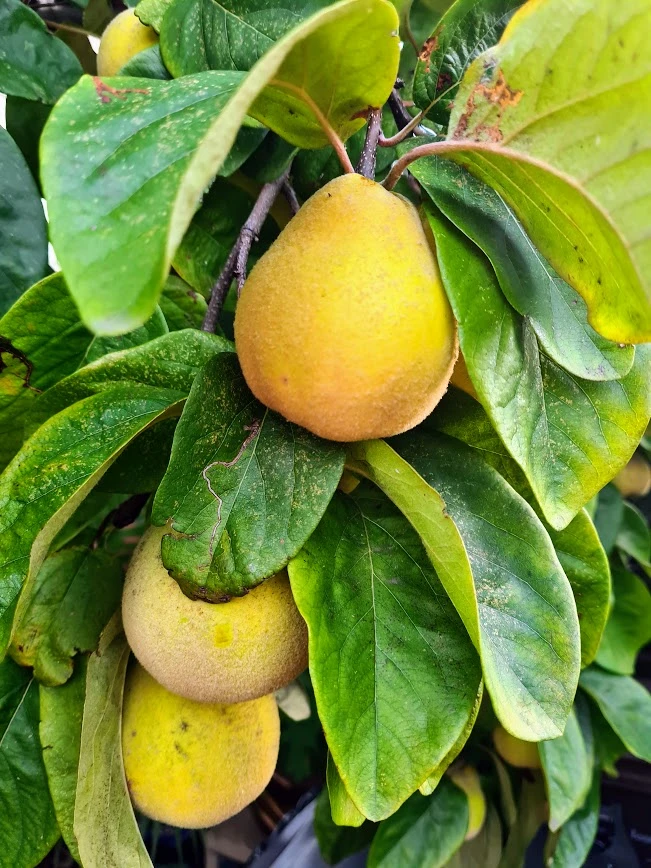
<p><img src="https://static.super.website/fs/super-website/userFiles/transla/uploaded-media/20221003172525-17272717980602.webp" alt="Quinces hanging on the tree, slowly ripening into their golden hue. Photo by Danni Howe" data-width="0" data-height="0"></img></p>
<p><em>Quinces hanging on the tree, slowly ripening into their golden hue. Photo by Danni Howe</em></p>
<p> </p>
<h4>About The Author</h4>
<p>Danni Howe is an experienced content creator and translator, offering Bulgarian-English translation services focusing on legal, medical, and economic fields.</p>
<p>For inquiries, collaborations, or content writing services, visit <span style="color: #236fa1;"><a style="color: #236fa1;" href="https://www.transla.co.uk/en" target="_blank" rel="noopener noreferrer"><strong>TRANSLA Translation Services</strong>.</a></span></p>
<p> </p>]]>
            </summary>
                            <link rel="enclosure" href="https://static.super.website/fs/super-website/userFiles/transla/images/a-16-quince-17272686340872.jpeg" length="380985" type="image/jpeg" />
                        <category term="Uncategorised" />
            <updated>2024-09-25T16:29:31+00:00</updated>
                            <dc:description><![CDATA[From my nan’s legendary quince jam to a fragrant autumn kitchen and a funny elocution mishap—discover how a humble quince tree in front of my house ties together childhood memories, quirky culinary delights, and even the art of Bulgarian to English translation. Join me for a fun twist on tradition and taste!]]></dc:description>
                    </entry>
            <entry>
            <title><![CDATA[Why Is The Cyrillic Alphabet Called Cyrillic? ]]></title>
            <link rel="alternate" href="https://transla.co.uk/en/blog/bulgarian-language/why-is-the-cyrillic-alphabet-called-cyrillic-1" />
            <id>https://transla.co.uk/en/blog/bulgarian-language/why-is-the-cyrillic-alphabet-called-cyrillic-1</id>
            <author>
                <name><![CDATA[Danni Howe]]></name>
                                    <email><![CDATA[dannailla77@gmail.com]]></email>
                            </author>
            <summary type="html">
                <![CDATA[<h4 style="text-align: justify;">How It All Started: The Glagolitic Connection</h4>
<p style="text-align: justify;">It is a bit confusing.</p>
<p style="text-align: justify;">The Cyrillic alphabet is named after Saint Cyril, a 9th-century Byzantine monk. But here is the twist—Cyril, along with his brother, Saint Methodius, originally came up with a different alphabet called Glagolitic. This alphabet was used for religious texts way back in the 9th - 10th centuries. And guess what? Glagolitic does not look anything like the Cyrillic letters we know today!</p>
<p style="text-align: justify;">Back in the day, the Glagolitic alphabet was a big deal because it gave the Slavs their very first written language, which was super important for spreading Christianity. Before that, the Slavs were busy worshipping a whole bunch of gods, like Perun, the god of thunder, and Veles, the god of the underworld. Yet, the alphabet that Saint Cyril actually developed is not the one we use today.</p>
<p style="text-align: justify;"> </p>
<h4 style="text-align: justify;">So why do we call it Cyrillic?</h4>
<p style="text-align: justify;">Well, Glagolitic was kind of a headache—it was tough to learn and not exactly user-friendly. People needed something easier for writing. Saint Clement of Ohrid and Saint Naum, the star students of Cyril and Methodius, coined a new, simpler script. They borrowed some letters from the Greek alphabet, making it way easier for anyone who already knew Greek. And in a sweet tribute to their Beloved teacher, they named it Cyrillic. Fun fact: it pretty much looks the same today! We have dropped a few letters along the way, and the modern Bulgarian Cyrillic alphabet is now more concise, with 30 letters instead of the original 44. But what Saint Clement and his crew developed in Saint Cyril’s honour has stood the test of time, making it one of the most enduring alphabets in the world.</p>
<p style="text-align: justify;"> </p>
<h4 style="text-align: justify;">The Spread of Cyrillic</h4>
<p style="text-align: justify;">Cyrillic quickly gained popularity in the First Bulgarian Empire and became the official script in the late 9th century, unifying the Bulgarian people and preserving their language and culture. From there, it spread to Russia through Bulgarian missionaries and scholars. Today, the language used in Orthodox services in Bulgaria, known as Old Church Slavonic, is archaic—much like Latin—and it was the original language spoken when the Cyrillic alphabet was created. While some words may be familiar, a modern-day Bulgarian would struggle to fully understand what the priests say in Old Church Slavonic.</p>
<p style="text-align: justify;"> </p>
<h4 style="text-align: justify;">The Legacy of Saints Cyril and Methodius</h4>
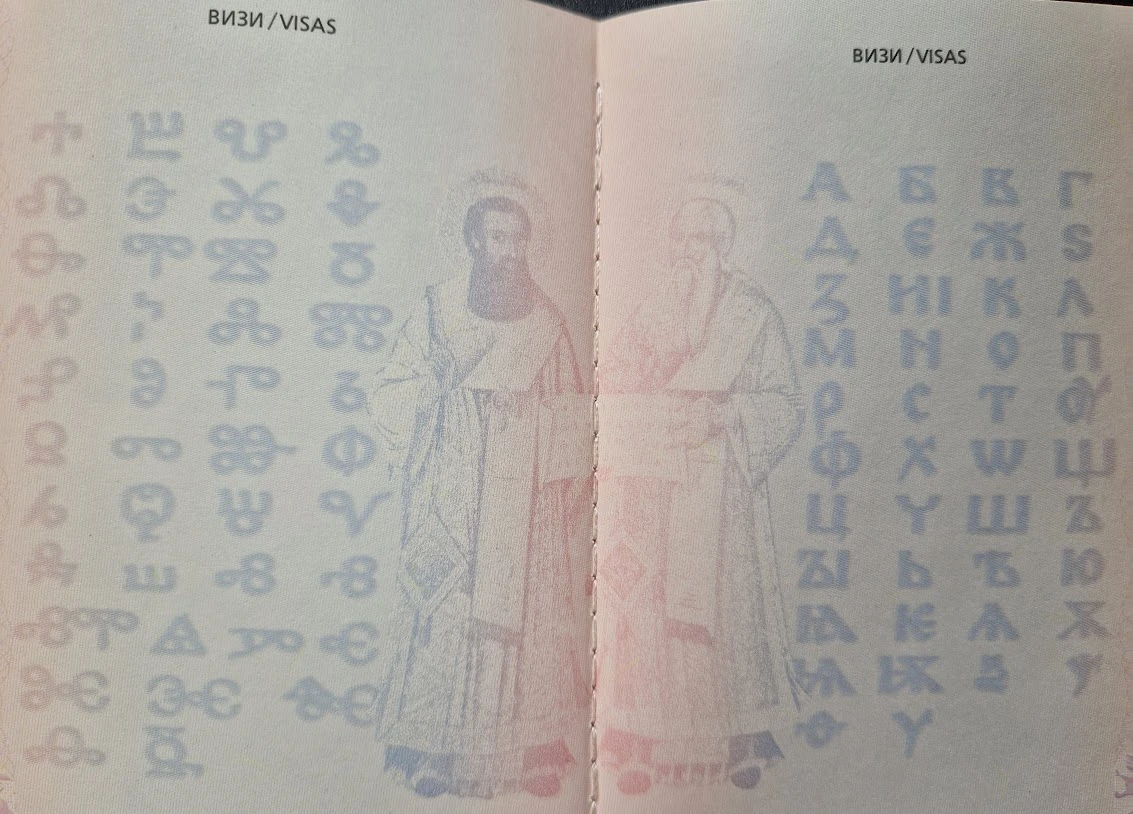
<p style="text-align: justify;">Nowadays, Greeks, Bulgarians, and Macedonians all want to claim Saints Cyril and Methodius as their own. Greece plays up their Byzantine Greek roots, while Bulgarians and Macedonians proudly highlight how the Brothers shaped Slavic culture and language. The truth? The brothers were born in Thessaloniki, now in Greece, but their real fame came from their work with the Slavs, which left a huge mark on the histories of Bulgaria and North Macedonia. And let’s be honest, we Bulgarians are especially proud of our connection to them. We celebrate the Cyrillic alphabet as a treasured gift we have shared with the world. So much so that our Bulgarian passports feature illustrations of Cyril and Methodius, along with the Glagolitic and Cyrillic alphabets, as a nod to their lasting legacy.</p>
<p style="text-align: justify;"> </p>
<p style="text-align: justify;"><em><span style="color: #e03e2d;"><strong><img src="https://static.super.website/fs/super-website/userFiles/transla/uploaded-media/20240813180945-1-17239909295908.webp" alt="Bulgarian passport pages depicting Saints Cyril and Methodius, the Glagolitic and Cyrillic alphabets" width="1133" height="814" data-width="1133" data-height="814"></img></strong></span></em></p>
<p><em>Bulgarian passport pages honouring St.  Cyril and <em>St. </em>Methodius, the Glagolitic and Cyrillic alphabets. Photo: Danni Howe</em></p>
<p> </p>
<h4>Here Are Some Interesting Facts About the Cyrillic Alphabet</h4>
<ul>
<li style="text-align: justify;"><strong>A unique alphabet:</strong> Cyrillic is one of the few alphabets in the world named after an individual. It originally contained 44 letters, but modern Bulgarian uses 30, and the Russians use 33.</li>
<li style="text-align: justify;"><strong>Widespread use:</strong> Today, Cyrillic is used by over 120 million people in countries across Eastern Europe and Central Asia.</li>
<li style="text-align: justify;"><strong>European Union recognition:</strong> When Bulgaria joined the EU in 2007, Cyrillic became the third official script of the European Union, alongside Latin and Greek.</li>
</ul>
<h4 style="text-align: justify;"> </h4>
<h4 style="text-align: justify;">Celebrating Cyrillic in Bulgaria</h4>
<p style="text-align: justify;">Every May 24<sup>th</sup>, Bulgaria comes together to celebrate one of our most beloved holidays—a day devoted to the Bulgarian alphabet, education, and the profound contributions of Saints Cyril and Methodius. They are honoured everywhere you look, with their portraits proudly displayed. Pupils decorate their classroom doors and the Brothers’ portraits with wreaths of peonies and fresh spring flowers.</p>
<p style="text-align: justify;">It is a celebration of those involved in education, but everyone gets involved. Schools, universities, and the entire community come together, with former students marking their graduation anniversaries and alumni reuniting. The whole town turns out to watch as students and academics parade through the streets, with the top students proudly wearing their "Top Achiever" sashes—so everyone knows exactly what they have accomplished! Parents and relatives cheer from the sidelines, ready to give them a nice treat afterwards. Folklore dancing fills the squares. It is a joyful celebration of national pride!</p>
<p style="text-align: justify;"> </p>
<p style="text-align: justify;">For a better idea of how 24 May is celebrated in Bulgaria, watch this video showing traditional festivities from my native town, Gabrovo in Central Bulgaria, where the first modern secular school was opened in 1835</p>
<p>The video highlights how Bulgarians honour their cultural heritage and the contributions of Saints Cyril and Methodius.</p>
<p> </p>
<p><em>Video credit: Mr Radoslav Parvanov, Radoslav Parvanov Photography</em></p>
<ul>
<li><em>Visit Radoslav Parvanov's official website: <strong><span style="color: #3598db;"><a style="color: #3598db;" href="https://www.parvanov.org" target="_blank" rel="noopener noreferrer">https://www.parvanov.org</a></span></strong></em></li>
<li><em>For more details or to explore their work, follow Radoslav Parvanov on his Facebook Page, <strong><span style="color: #3598db;"><a style="color: #3598db;" href="https://www.facebook.com/RadoslavParvanovPhotography" target="_blank" rel="noopener noreferrer">Radoslav Parvanov Photography</a></span></strong></em></li>
</ul>
<p style="text-align: justify;"> </p>
<p style="text-align: justify;"><iframe src="https://www.youtube.com/embed/whnpe5g9qPA" width="560" height="314" allowfullscreen="allowfullscreen"> </iframe></p>
<p style="text-align: justify;"> </p>
<h4>Sources:</h4>
<p>Encyclopaedia Britannica: "<a href="https://www.britannica.com/topic/Cyrillic-alphabet" target="_blank" rel="noopener noreferrer"><strong><span style="color: #3598db;">The History of the Cyrillic Alphabet</span></strong></a>". </p>
<p>Cambridge University Library: " <a href="https://www.lib.cam.ac.uk/collections/departments/slavonic-collections/local-catalogues/transcription-cyrillic" target="_blank" rel="noopener noreferrer"><span style="color: #3598db;"><strong>Transcription of Cyrillic</strong></span></a>" </p>
<p> </p>
<p> </p>
<h4>About The Author</h4>
<p>Danni Howe is an experienced content creator and translator, offering Bulgarian-English translation services focusing on legal, medical, and economic fields.</p>
<p>For inquiries, collaborations, or content writing services, visit <a href="https://www.transla.co.uk/en" target="_blank" rel="noopener noreferrer"><strong><span style="color: #3598db;">TRANSLA Translation Services</span></strong>.</a></p>]]>
            </summary>
                            <link rel="enclosure" href="https://static.super.website/fs/super-website/userFiles/transla/images/a-12-adetailedandhistoricallyinspireddigitalillus-17239900456087.jpg" length="286011" type="image/jpeg" />
                        <category term="Bulgarian Language" />
            <updated>2024-08-18T15:42:43+00:00</updated>
                            <dc:description><![CDATA[Discover the fascinating history behind the Cyrillic alphabet, its origins from the Glagolitic script, and how it became a symbol of cultural identity in Bulgaria and beyond. Learn about the contributions of Saints Cyril and Methodius and the enduring legacy of this unique alphabet used by millions today.]]></dc:description>
                    </entry>
            <entry>
            <title><![CDATA[TRANSLA Translation Services Blog Comment Policy]]></title>
            <link rel="alternate" href="https://transla.co.uk/en/blog/important/transla-translation-services-blog-comment-policy" />
            <id>https://transla.co.uk/en/blog/important/transla-translation-services-blog-comment-policy</id>
            <author>
                <name><![CDATA[Danni Howe]]></name>
                                    <email><![CDATA[dannailla77@gmail.com]]></email>
                            </author>
            <summary type="html">
                <![CDATA[<p style="text-align: justify;"><em>Welcome to the blog of TRANSLA Translation Services! </em></p>
<p style="text-align: justify;"> </p>
<p style="text-align: justify;"><em>We are glad you are here and appreciate your interest in engaging with our content.</em></p>
<p style="text-align: justify;"> </p>
<p style="text-align: justify;"><em>At TRANSLA, we encourage meaningful and enjoyable discussions. Feel free to ask questions, share insights, and interact with other users, but please do so respectfully and stay on topic.</em></p>
<p style="text-align: justify;"> </p>
<p style="text-align: justify;"><em>At TRANSLA, we place great importance on polite communication, which is why we have established rules (Comment Policy) to ensure that the TRANSLA blog is a pleasant place for everyone.</em></p>
<p style="text-align: justify;"> </p>
<p style="text-align: justify;"><em> Please take a moment to familiarise yourself with our Comment Policy before sharing your thoughts.</em></p>
<p style="text-align: justify;"> </p>
<p style="text-align: justify;">1. Be Respectful and Courteous </p>
<p style="text-align: justify;">At TRANSLA, we value different opinions and encourage healthy debates. However, verbal attacks, insults, or any form of harassment will not be tolerated. Please be respectful and courteous with others. Refrain from using or tolerating offensive, obscene, or inappropriate language.</p>
<p style="text-align: justify;"> </p>
<p style="text-align: justify;">2. Comment Only on the Topic </p>
<p style="text-align: justify;">Comment only on the specific post. Off-topic comments can disrupt the conversation and will be removed.</p>
<p style="text-align: justify;"> </p>
<p style="text-align: justify;">3. Respect Privacy </p>
<p style="text-align: justify;">Do not disclose any personal information – yours or of third parties. This includes email addresses, phone numbers, and other confidential details. Comments containing such information will be removed immediately.</p>
<p style="text-align: justify;"> </p>
<p style="text-align: justify;">4. Constructive Criticism is Welcome </p>
<p style="text-align: justify;">At TRANSLA, we appreciate constructive feedback and are always striving to improve. However, please ensure that your criticism is respectful and intended to be helpful, not hurtful.</p>
<p style="text-align: justify;"> </p>
<p style="text-align: justify;">5. Zero Tolerance for Hate Speech and Discrimination </p>
<p style="text-align: justify;">At TRANSLA, we maintain a strict zero-tolerance policy towards any form of hate speech and discrimination. This includes but is not limited to, discrimination based on legally protected characteristics such as race, ethnicity, gender, religion, age, sexual orientation, or disability. Comments that violate these rules will be immediately deleted, and offenders will be blocked without warning. Offenders may be subject to legal action in accordance with UK law.</p>
<p style="text-align: justify;"> </p>
<p style="text-align: justify;">6. Zero Tolerance for the Spread of Fake News, Fraud, and Spam or Self-Promotion </p>
<p style="text-align: justify;">Unsolicited advertising, spam, or self-promotion is not allowed on the TRANSLA blog. This includes links to personal blogs, businesses, or other websites. TRANSLA does not tolerate the creation and dissemination of fake news and fraud. Any attempts to spread disinformation, create or distribute fake news through the TRANSLA blog, attempts at fraud, or unsolicited advertising (spam) will be immediately deleted. In the case of serious violations, legal action will be taken in accordance with UK law.</p>
<p style="text-align: justify;"> </p>
<p style="text-align: justify;">7. Comment Moderation </p>
<p style="text-align: justify;">All comments are subject to moderation. TRANSLA reserves the right to edit or delete any comments that violate the Comment Policy and to block users who repeatedly violate these rules.</p>
<p style="text-align: justify;"> </p>
<p style="text-align: justify;">8. Legal Responsibility and Obligations </p>
<p style="text-align: justify;">By posting a comment on the TRANSLA Translation Services blog, you agree that you are responsible for its content. You agree to indemnify TRANSLA Translation Services and its administrators from any claims and liabilities (including legal costs) that may arise from your comments.</p>
<p style="text-align: justify;"> </p>
<p style="text-align: justify;"><em>Thank you for being a part of our community and helping us maintain a positive environment. We look forward to hearing your thoughts and seeing how you contribute to the conversation!</em></p>
<p style="text-align: justify;"> </p>
<p style="text-align: justify;"><em>If you have any questions about the Comment Policy, please feel free to contact us at office@transla.co.uk.</em></p>
<p style="text-align: justify;"> </p>
<p style="text-align: justify;"><em>Happy commenting!</em></p>
<p style="text-align: justify;"><em><img src="https://static.super.website/fs/super-website/userFiles/transla/uploaded-media/винаги-учтива-комуникация-в-блога-на-transla-translation-services---политика-за-17238150011555.webp" alt="Always Polite Communication on the TRANSLA Translation Services Blog - Blog Comment Policy" width="991" height="991" data-width="991" data-height="991"></img></em></p>
<p style="text-align: justify;"><em>This image was AI generated by Danni Howe</em></p>]]>
            </summary>
                            <link rel="enclosure" href="https://static.super.website/fs/super-website/userFiles/transla/images/a-10-политика-за-ползване-на-блога-на-transla-translation-services-17238149185594.jpg" length="156109" type="image/jpeg" />
                        <category term="Important! " />
            <updated>2024-08-16T15:07:50+00:00</updated>
                            <dc:description><![CDATA[Explore the blog of TRANSLA Translation Services, where respectful and meaningful discussions are encouraged. Review our Comment Policy to ensure a positive experience for all. We welcome on-topic comments and constructive feedback while maintaining zero tolerance for hate speech, discrimination, spam, and fake news. Join our community and contribute to a respectful dialogue.]]></dc:description>
                    </entry>
    </feed>